It is so reassuring knowing that I am secure in God’s hand. Nothing I can do will pry His hands open. Nothing I fail to do will cause Him to drop me. Such great news!
God does not need me, nor can I mess up His plans. God wants me even though I am broken and messed up. That is one of the most reassuring things I can ever hear. So often we think that we just messed up God’s plan. We think, “Oh man, I just messed up that interaction.” or we say, “What if I don’t say the right thing? What if that was their one chance at salvation?” I have great news for you. It is not up to us! God uses us in our blunders, our crappy moments, and our mistakes.
Moses, David, Abraham, Jacob, Peter, and Paul were all pretty messed up. They all made mistakes that probably made them think that God no longer wanted them. Moses, David, and Paul all killed people; Abraham and Jacob manipulated people to get their way; and Peter betrayed Jesus. God forgave them all and did amazing things through them.
Next time you are feeling like you are not worthy, or that you are too messed up, just remember that God likes to use the outcasts.
As a guy, I hear a lot of guy talk. I have listened to it my whole life. Some guy talk is childish but not damaging. Some guy talk, on the other hand, is disgusting. I won’t make the generalization and say that men have suddenly started acting misogynistic and that men did not behave this way before. It would be stupid of me to say that. As a historian, I have read enough history to know that men have always acted in “macho” ways since the fall.
What real men need to do is go to the Bible. Men bow before God. boys play with toys, women, and their egos.
Brandon foster
I am also not going to talk about “toxic” masculinity. This term has lost all meaning. It is now a general term inserted into any conversation to mean some ambiguous characteristic of men that the individual does not like. Instead, I want to discuss what I will call “machoism.” Machoism summarizes the traits that men exhibit that are crappy. They include, but are not limited to, extreme individualism, misogyny, laziness, looking down on “weak” men, etc.
To kick things off I found the tweet below which I think starts this conversation well.
This statement is false, misogynistic, and just stupid. These men make me so frustrated. They are so insecure about their masculinity that they have to crush everyone around them. They cannot stand on their own accomplishments, so they push down everyone else until they are standing tall. They are childish, weak, and mean.
Men do inherently care for those around them. Males do not. This is the second point that annoys me. To many males think that once they start growing hair they are “men.” To quote Dwight from the Office , that is “false.” Becoming a man is a process, and an achievement. Not all males are men. In fact, I would argue that most aren’t. They are boys in grown up bodies parading around deceiving as many people as possible into thinking that they are men.
Advertisements
The man writing this tweet is obviously a boy. He thinks that men are superior to women. This is why he think that males, when they become rich, will automatically take care of their woman. I can’t count how many rich men treat the people around them like trash. The amount of movies depicting this very thing is staggering.
Not all women support their families when they become rich, but not all rich women think that they no longer need a man either. Both statements in this tweet are wrong. The fact that there are dozens, even hundreds of these accounts, makes me very frustrated. How much vile is being spewed by these boys?
What real men need to do is go to the Bible. Men bow before God. boys play with toys, women, and their egos.
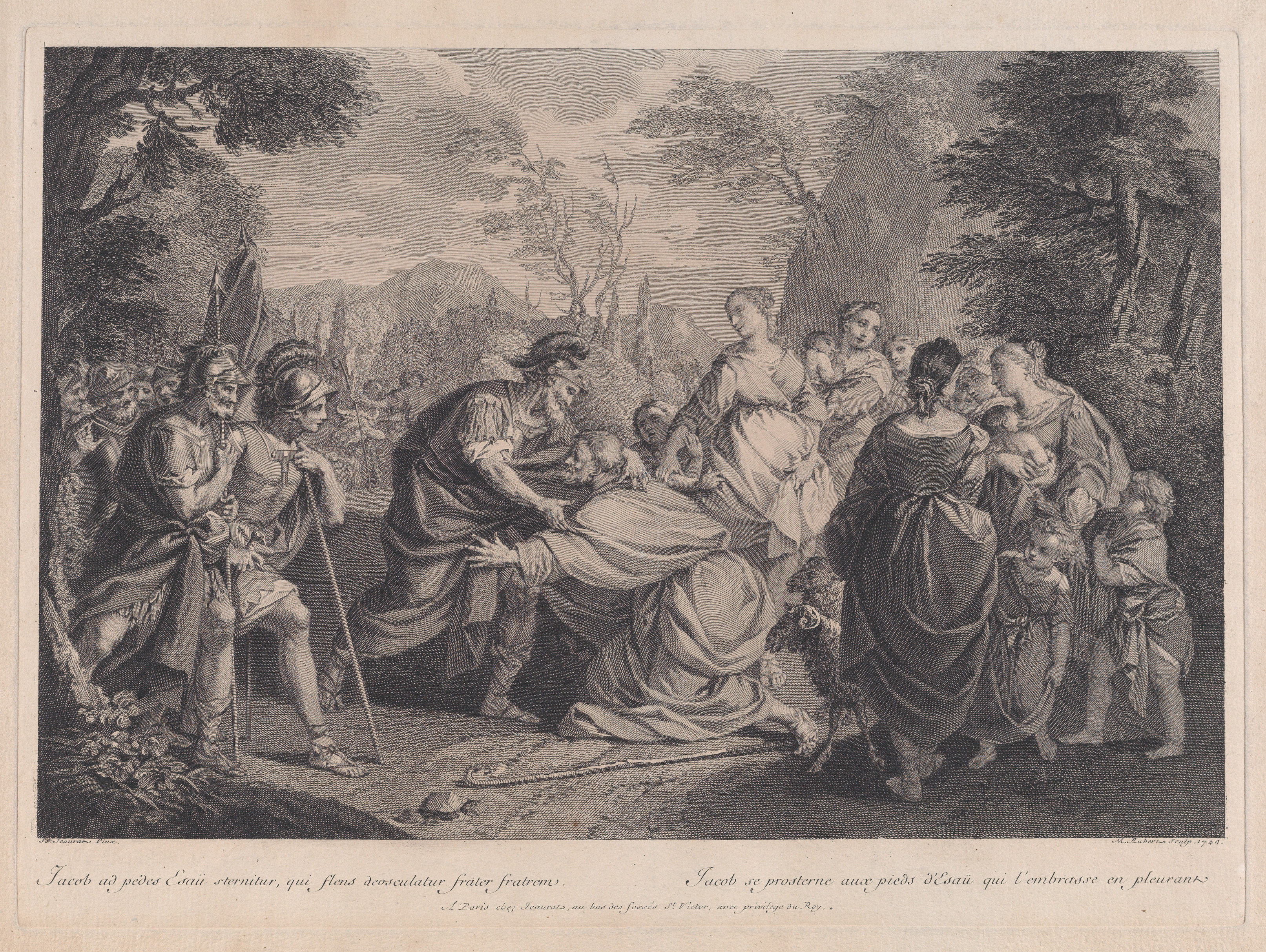
The story of Jacob and Esau can be told in multiple different ways. Some might try to make the story about Esau by saying that he was a simple country boy who was manipulated by his mean brother and conniving mother.
Another group of people will focus on Jacob. This group will say that Jacob was only following what God has already decreed to his parents. God had said that Jacob would rule his brother, so wasn’t Jacob just following this by taking the birthright and blessing?
No. Jacob was following his own selfish desires, Rebekah, was following her own desires, and Esau was following his own desires. There are no good characters in this story. But there are two takeaways that we can leave with from this story.
The Jacob
A Jacob is someone who believes in God, but tries to follow God’s commands their way. While the desire might be on the right path, the way of doing it is wrong. God had told Isaac and Rebekah that Jacob would be the ruler of Esau. He did not tell them how He was going to do it. That was not necessary information for them. When we are told by God that He is going to do something, He is not telling us so that we can complete it on our own. He is telling us so that we know when it happens it was done by God. He is essentially calling His shot before He shoots. Jacob and his mother believed what God said, but they thought that they had to fulfill the prophesy on their own.
Advertisements
This is the takeaway from Jacob: believe in God, and let God work. God does not need our help. When He says something will happen He does not need us to push it along. Every time we try to interpret how God is going to do something we get it wrong. Abraham had Ishmael, Jacob temporarily broke his family, and Israel selected Saul. Each time we force a prophesy we make things worse.
The Esau
Now we turn to the Esaus in life. While Jacob may have tried to push God’s plan along, he still believed and trusted in God. Esau, on the other hand, had little to no respect for God. He spat on his birthright showing that he had no desire to live his life for God. He wanted to live his life his way.
Esau shows us what life is like when we rebel against God. Though Jacob tried to force the blessing and Esau hated it, God was going to do what He wanted to do. He was going to bless Jacob when and how He wanted. Esau would become a nation of his own (the Edomites). But his nation would become lower than his brothers (the Israelites). Esau tried to kill Jacob, and Jacob stole the birthright. But neither action pushed, pulled, or changed God’s plan.
Conclusion
We are all either a Jacob or an Esau. We either believe and love God, but try to anticipate what God’s plans are, or we despise God and anything that He plans. Either way, God’s plans will always happen. We cannot change or stop anything that God says will happen.
For me, this is a reassuring concept. There are so many aspects of my life that I have no control over. Though I am a Jacob myself, God still loves me. I try to push things along because I am impatient and sinful, but Jesus has paid my debt. I am forgiven and loved no matter what. It is calming to know that God has control of those things. I can love, worship, and serve knowing that my savior is in my corner.
Saturday at last, and the best kind too. Spring is in full swing making the world feel warm, lazy, and all together pleasant. The workweek is finished as are my weekend chores. The day is still young, so I decided to head over to my favorite coffeeshop. I like to sit on the patio, do some reading, think a little, and people watch. With my left hand I am holding my page saved while with my right I lift my coffee up for a drink. Sip. Aaaah. Iced caramel Macchiato, perfect.
Out the window pedestrians pass. Some are rushing off to some unknown destination, others are doing some light shopping, even others seem to be enjoying the warm Saturday like I am. I am near enough to hear the cars passing by which gives the general environment a pleasant hum which actually goes well with the coffee shop rock playing. I can’t quite tell what song is playing, but it sounds like its from the early twenty-tens. My mind must have wandered because a car honking startles me. When my eyes refocus I see two men walking toward each other on the sidewalk outside the shop.
The man on my left has long hair pulled into a loose bun. While the majority of his hair is still held, there are plenty of strands tumbling out. he’s wearing a fitted button up shirt with it unbuttoned to create a very low V-neck. He has wide brim glasses that may or may not be used to improve eyesight. To complete his ensemble, he has skinny jeans and dress boots. A coffee cup with what looks like a sarcastic sticker on it is in his right hand. After looking at him for a second my eyes shift over to the mac approaching him.
This man could not have been more of a complete opposite. The first guy looked like a skinny city boy, but this man was a solidly built country boy. His hair was cut short with a camo ball cap resting on his head. He has a plain shirt on and worn fitted blue jeans. He also had used cowboy boots that had definitely seen some use.
Advertisements
The way they were approaching almost seemed like they were about to confront each other, but at what seemed to be the last second, they slightly shifted to allow more room for the other and continued on by. A quick glance and the encounter was over. It was both a weird moment and a completely boring one.
The reason why I am telling this story is to make a point. A round about one, but one non the less. The two men I just described represent the two main concepts of masculinity. The one on the left represents one ideal while the one on the right another. The interesting thing about it thought, is that I cannot say which ideal belongs to whom. This is because our perception of the person depends on our internal biases.
I grew up near Los Angeles. I lived there during my formative years of high school and college. Because of where I grew up, I tend to have a lean toward the skater, punk, or hipster looks. On the flipside, I tend to not look as favorably on those who dress redneck.
All too often we treat people based on our first impressions which usually comes from the way a person presents themselves. We look at how someone is dressed, and we assume things about them. Take our hipster friend for a second. We could assume that he spends too much time and money on how he looks. Based on that idea we could take it a step further and say that he probably is weak, isn’t the best worker, has never done a hard day’s work in his life, and lets women walk all over him. Or we could say that he is well dressed and put together, meaning that he is organized and disciplined. He most likely has a professional white-collar job.
Similarly, we could do the same experiment with our country boy. Based on his clothing we could either say that he is a hard worker who isn’t afraid to get dirty or he doesn’t care for his stuff which is why they are tattered. He could either be a skilled trade-worker or an unread redneck. As for his love life, he could be a family man or misogynistic abuser. As you can see, first impressions can say quite a bit, and half of it depends on our stereotypes.
Fate, the hand of God guiding us towards the destination He desires, or an unknown impersonal force pushing us towards an unknown goal by something that doesn’t really have feelings.
Hi, I’m Brandon Foster from Foster of Vlog. Today we’re going to look at one video to show the example of what I’m talking about, how our culture views fate.
Like most things, there are really two different sides. Primarily, you have the Christian side, especially the reform side, which views a very, uh, predestine type of fate where God pushes, pulls, and has a direct influence in what we do. His way is the way that goes, whatever he wants, wins. The other side is free will, where there is no God.
God does not really push or pull. Uh, if he does exist, he doesn’t really do much to change anything. Now there is a view in the middle, and this is kind of where I want to talk about, and this middle view kind of meshes both. . It’s kind of the predestine view of the reformed, but it’s also the kind of do what I want, but there’s something pushing and pulling, but it’s not a personal being.
This is what I want to focus on today. And to me, this is really one of those areas where I think that we actually do understand and we truly do. that there is a being that uh, or at least there’s something, maybe not necessarily a being, but there’s something that drives us. There’s something deep down here (heart) and here (mind) that we can tell is pushing us towards something.
Um, again, reformed Christians think that’s God. We believe that God is the pusher and puller of the world. He created it, he authored it. He spoke it into being with one word, and from then he has been continually molding the world. Um, this middle path is trying to keep that molding going, but they want to remove God.
But before we continue too much, let’s watch the clip that I want to show us and then we’ll continue our discussion.
“Kids, I’ve been telling you the story of how I met your mother, and while there’s many things to learn from this story, this may be the biggest. The great moments of your life won’t necessarily be the things you do. They’ll also be the things that happen to you. Now, I’m not saying you can’t take action to affect the outcome of your life.
You have to take action, and you will, but never forget that on any day, you can step out the front door and your whole life can change forever. You see, the universe has a plan, kids, and that plan is always in motion. A butterfly flaps its wings and it starts to rain. It’s a scary thought, but it’s also kind of wonderful.
All these little parts of the machine constantly working, making sure that you end up exactly where you’re supposed to be, exactly when you’re supposed to be there, the right place at the right time.”
So as you can see from that clip, this show, for those who are not aware of the name, this show is called “How I Met Your Mother,” and it is about this character Ted. Now, Ted, throughout the whole show is dictating to his children the story of how he met their mother. Um, hence the title of the show, and a theme he talks about a lot throughout the whole show is this concept of destiny. He’s looking for the one, the one that Destiny has prepared. and he talks about the universe quite a bit. The universe has this plan. The universe did this. What is the universe trying to say to me? And when I first watched it as a, you know, a young adult, I more chuckled at the whole universe concept.
But now as I’ve gotten older, and especially this last run through, that scene struck me. and it struck me not because of the, you know, absurdity of the universe of looking towards a impersonal created, you know, object and thinking that it has a plan for you.
While that is absurd, it’s neither here nor there. What really got me was how close the writers for this show got In dictating or depicting a reformed view of life in Christianity, we believe, as I’ve said, that God is dictating what happens. God, may not control every aspect, but there are key events in every person’s life that, or at least in most people’s life, that God says will happen.
And no matter what we want, God is pushing us towards that. This show shows that that’s not just a reformed belief, that that belief is written, is etched inside of all of us. We all feel the pull towards that type of understanding. We truly believe that there is something out there that is guiding us towards God or towards an event. Um, and I think we all understand. We like to fight it. Um, but we all believe that. This is why our culture, and for most of human history, we have had certain things like tarot cards, we’ve had things like seances, you know, speaking to the dead, and they can tell us what we should do in our lives because somehow the dead have a view into the world that we can’t.
This is why we do Zodiac signs. You know, when you were born dictates who you will be and who you will get along with. And a person with one sign should be friends with another or shouldn’t be friends with others. And we crave this kind of box to put ourselves in. We want to be in the box because the box guides us. It’s the idea of walking either down a corridor with lights and walls, and we feel protected. Or it’s like walking through a deserted jungle, or what you feel is deserted, and you feel vulnerable. That is the difference. We crave the corridor. We still want to choose things, and that free will is still definitely a thing, but we crave that there is something guiding us toward the destination, that it is not just fully up to us, and that every decision is either do or die. We crave that thing to, you know, give us the pushes and the shoves toward what we want. This show shows that Ted, through this whole story, which starts when he’s in his middle twenties, ends when he’s in his middle-late thirties.
So for about 10 years, he is craving what he calls Destiny. And this is a pinnacle scene in that storyline. And I thought it’d be an interesting exercise to take what the writers had written, and tweak a couple of pieces and replace when they say universe or machine or anything abstract and turn it into a reformed thought.
So the universe would be God. And I thought it’d be very interesting to see how reformed this line actually is if we did that. So the rewriting goes like this.
“kids, I’ve been telling you the story of how I met your mother. And while there are many things to learn from this story, this may be the biggest, but the great moments of your life won’t necessarily be the things you do. They’ll also be the things that happen to you. Now, I’m not saying you can’t take action to affect the outcomes of your life. You have to take action and you will, but never forget that on any day you can step out the door and your whole life can change forever. You see, God has a plan kids, and that plan is always in motion. A butterfly flaps its wings and it starts to rain. It’s a scary thought, but it’s also kind of wonderful. All these little parts of God’s plan constantly working, making sure that you end up exactly where you’re supposed to be, exactly when you’re supposed to, the right place at the right time.”
That sounds extremely reformed. and it’s so fascinating that a very liberal show in a very liberal country can be so conservative and so reformed. They were this close, an inch away from hitting reformed Christian theology. And I think this is one of the things that is fascinating about humanity and reality.
We are never that far from God. God is always right there, but that little gap is something that, one, we can’t breach on our own, and two, we will never want to breach. We want to parallel next to God without having Him. And that’s what makes us such an enemy of God. Scripture talks about, or Paul writes in scripture, that we are enemies of God.
Certain Christians want to please God, but they wanna do it on their own terms. The story of Abraham kind of gives that example. But what really makes us so antagonistic to God is we want to take everything he’s done, everything about him, and rewrite him out of the story.
And that is what is kind of crazy. We desire Something. A thread of destiny, of fate, to tie all of us together to tie everything in a tapestry of beauty. But we don’t want the weaver, we want the thread. We want beauty. We want connectivity. We want our destiny, but we don’t want the person weaving it. We want it to weave itself, and yet we complain when things aren’t personal. It’s a big thing Americans complain about. Well, we want it to be personally tailored to me it’s like, one, none of us are that special. Two, we have a personal being, God, who wants to have a personal relationship with you. He wants to be there with them, and yet we want to throw him out because we don’t like the idea of consequences.
This is something I’ll talk about a little bit more in my next video as we continue through this series, but we want the father without the judge. We want the action without the consequence. We want fate without responsibility. And that is what’s fascinating and very interesting about our society and society, I think in a hole across the entire globe, we are this close when we talk about God, our theology is this close at any given day, but we want to write God out of it.



 Foster A...