
Welcome to part 2 of my Easter series! In this blog, I want to discuss three archaeological artifacts and three primary sources. I have noticed that many Christians have never taken the time to familiarize themselves with defenses for their faith. I am not suggesting that every Christian needs to be a master at apologetics. But a simple understanding would go a long way. I think a very easy category to begin with is history. That is why I made part 1 (link here) and a part 2 discussing historical evidence for Jesus. The six things I want to focus on for the rest of this blog are: Caiaphas’ ossuary, The Pilate Stone, the Crucified Heel, Tacitus, Josephus, and Pliny the Younger. Each source adds valuable evidence for the biblical narrative. Without any further-a-do, let us dive into history for a moment.
Caiaphas’ Ossuary
In 1990 a group of workers were doing their job when one of them suddenly uncovered a tomb. I have been told that this is actually a very common issue in Israel. Since it is such an old country, and has been occupied by so many different groups or rulers it seems every moved rock reveals some archaeological artifact.

This time a piece of biblical history was uncovered. When scholars descended into the tomb they found a group of ossuaries. An ossuary is a box that contains bones. This was a common practice in 1st century Israel. One of the ossuaries had the inscription “Joseph son of Caiaphas.” If you remember from your Sunday school class, Caiaphas was one of the men Jesus stood in front of. Scholars believe that this is his tomb.
Archaeological finds like this are important because they smooth out the tension surrounding Jesus. If the Bible mentions all of these characters that interacted with Jesus and we couldn’t find the most prevalent ones in any way outside the Bible that would be a problem. Finding Caiaphas just adds one more level of proof for the Bible.
The Pilate Stone

Up next we have a more important archaeological discovery. The last one was important, but I think less people argued over Caiaphas’ historicity. Pontius Pilate on the other hand, was argued over quite a bit. Outside of some writings (which we will go over later) we had not uncovered any sources proving Pilate
Well now we have! The Stone of Pilate is a block containing writing with the name of “Pontius Pilatus” written on it. He was dedicating something to Emperor Tiberius so he wrote what he did and that he did it. Talk about writing it in stone. This stone puts Pilate in the correct region (Judea), the correct time (under emperor Tiberius), and the correct position (governor). These three things are very important extra-biblical facts for the Bible.
The Crucified Heel
Our last archaeological artifact is a heel bone with a twisted stake in it. This discovery is important because we had almost no proof proving crucifixion with nails. We had drawings and descriptions with rope, but no nails. The reason why this is concerning is because Jesus was nailed to the cross.
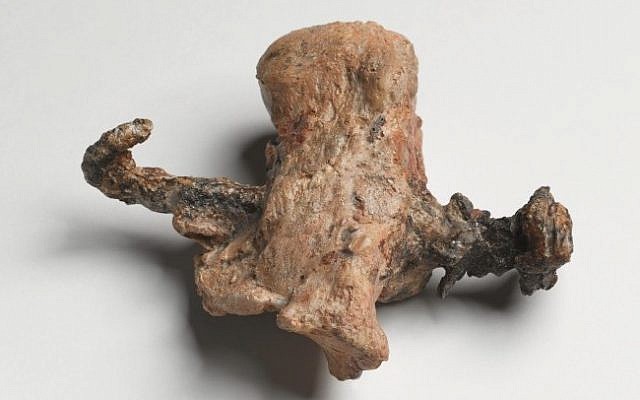
If the Bible says that Jesus was nailed to the cross, and the Romans never nailed people but only tied them, that is a big problem. That kind of small detail can show that the “witness” had never been there, and that they made it up. But now that we have proof of nails being used we can believe the testimonies of the gospel writers.
Tacitus, Josephus, Pliny the Younger
Now we have reached the section on primary sources (a first hand account). I am not going to break this section up, but instead, I am just going to write them out and let you see the words for themselves. Each person is writing shortly after Jesus except for Pliny who wrote his passage around 100 AD. These writings are important because they prove that Jesus was worshiped as God (part of the trinity) from around the 50s or 60s AD. Many critics try to say that Christ was not deified until the 3rd or 4th century. These secular writings (non of them were Christian) give the greatest evidence for Jesus, and for Him being believed to be God.
Therefore, to stop the rumor, Nero substituted as culprits and punished in the utmost refinements of cruelty, a class of men, loathed for their vices, whom the crowd styled Christians. Christus, the founder of the name, had undergone the death penalty in the reign of Tiberius, by sentence of the procurator Pontius Pilatus, and the pernicious superstition was checked for a moment, only to break out once more, not merely in Judea, the home of the disease, but in the capital itself, where all things horrible or shameful in the world collect and find a vogue.
Tacitus
At this time there was a wise man called Jesus, and his conduct was good, and he was known to be virtuous. Many people among the Jews and the other nations became his disciples. Pilate condemned him to be crucified and to die. But those who had become his disciples did not abandon his discipleship. They reported that he had appeared to them three days after his crucifixion and that he was alive. Accordingly, he was perhaps the Messiah, concerning whom the prophets have reported wonders. And the tribe of the Christians, so named after him, has not disappeared to this day.
Josephus
They were in the habit of meeting on a certain fixed day before it was light, when they sang in alternate verses a hymn to Christ, as to a god, and bound themselves by a solemn oath, not to any wicked deeds, but never to commit any fraud, theft or adultery, never to falsify their word, nor deny a trust when they should be called upon to deliver it up; after which it was their custom to separate, and then reassemble to partake of food–but food of an ordinary and innocent kind.
Pliny the Younger

 Foster A...